
The 5 Best AI Tools for Running Coaches in 2026
 Javier Alcántara
We analyze the top 5 artificial intelligence tools for running coaches in 2026: what they truly deliver, how they differ, and how to leverage them to plan faster and protect athlete health.
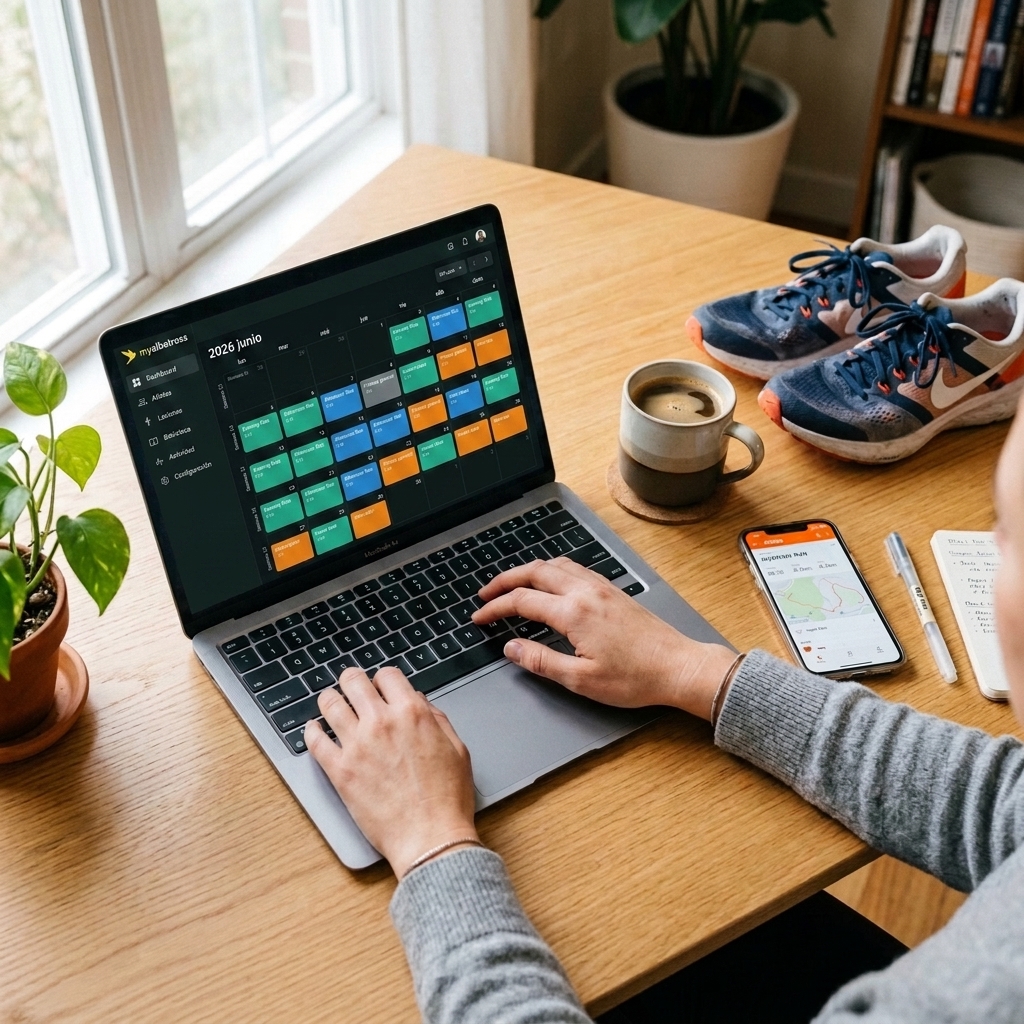
A couple of years ago, using AI as a coach meant asking ChatGPT for a generic marathon plan and fixing it by hand. Today there are tools that read your athletes’ watch data, warn you when someone is piling up too much load, and draft next week’s plan for you to review.
The underlying problem hasn’t changed: your runners keep producing more data (GPS, heart rate, how they feel, aches and niggles) and you still have the same hours to go through it. With 10 athletes you can manage it by hand. With 30, between spreadsheets, Strava and calendars built session by session, something slips through, and what slips through is usually an overload that ends in an injury.
That said, an app claiming to “use AI” doesn’t make it useful for a coach. Some are built to replace you with automatic plans for runners who train alone. Others come from cycling and fill the screen with metrics that mean little to a recreational runner.
We looked at five tools running coaches are using today, with one question in mind: do they save you work, or only the athlete?
What a Running Coach Needs from an AI Tool
Before going through each one, here are the criteria we used:
- It suggests, you decide. AI can propose structures, paces or adjustments. Final sign-off belongs to the coach.
- It syncs with watches on its own. Garmin, Suunto, Polar or Strava, without asking athletes to export files.
- It watches health, not just performance. Injury is the most common reason a runner stops training with you. The tool should cross-check load, how the athlete feels and reported niggles to warn you before it happens.
- It takes repetitive tasks off your plate. Session summaries, rescheduling when someone can’t train, tracking niggles.
- It doesn’t force you to juggle five apps. Planning, athlete chat and billing in one place.
Quick Comparison: The 5 Tools at a Glance
| Tool | AI Type | Injury Prevention | Watch Sync | Integrated Billing | Best For |
|---|---|---|---|---|---|
| MyAlbatross | Built-in assistant (Albi) + MCP connector for any LLM | Advanced (Global Stress Index, GSI) | Yes (Garmin, Suunto, Polar, Strava) | Yes (built-in payments) | Coaches who want planning, health and business in one platform |
| Humango | Conversational assistant (Hugo) | Moderate (HRV tracking) | Yes (Garmin, Wahoo, Apple Watch) | No | Self-coached athletes and triathlon coaches |
| Athletica.ai | HIIT Science and Critical Power models | Basic (acute vs. chronic load) | Yes (Garmin, Wahoo, Strava) | No | Coaches heavily focused on physiology |
| TrainAsONE | Automatic adaptive plans | Moderate (fatigue detection) | Yes (Garmin, Strava and others) | No | Runners training without a coach |
| Claude / ChatGPT | General-purpose language models | No (manual analysis required) | No (unless connected via MCP) | No | Writing, ideas and one-off analysis |
A Closer Look at the 5 Tools
1. MyAlbatross: Planning, Health and Business in One Platform
MyAlbatross was designed from day one for coaches who manage a group of runners. It isn’t a digital calendar with an AI chat bolted on: the AI sits inside the tasks you do every week.
How It Uses AI
- Albi, the coach’s assistant. You ask in plain language: build a taper week for a marathoner, adapt a hill block because the athlete reported calf tightness, or put together this month’s report from their real data. Albi returns a proposal and you decide what stays.
- MCP connector for your own AI. If you already work with Claude, ChatGPT, Gemini or Cursor, you can connect them to MyAlbatross and ask about your athletes directly, without exporting anything. More on how this works below.
- Global Stress Index (GSI). A proprietary metric that combines training load, physiological balance and wellness into a single number. It analyzes more than 30 variables every day to estimate injury risk, including for sessions that haven’t happened yet: while you plan, you see how the athlete’s risk will evolve and can adjust before sending the plan.
Not AI, but Just as Important
- Injury management. Athletes report niggles from their app, you see them on a body map, link them to the activity that triggered them and track pain over time.
- Built-in payments. Create your subscription plans, assign them to each athlete and they pay in the app. No more chasing bank transfers at the end of the month.
- Dedicated chat. One-to-one or group conversations with voice notes and documents, keeping athletes out of your personal WhatsApp.
- Flat pricing. €49.90/month or €479/year for the coach, and the app is free for their athletes.
Who it’s for: running, trail and triathlon coaches with a roster of athletes who want to spend fewer hours on manual analysis and stop losing runners to avoidable injuries.
🔗 Want to try it with your own athletes?
You can try MyAlbatross for free and connect your runners in a few minutes. See the plans and what each includes on our pricing page.
2. Humango: For When the Athlete’s Schedule Changes Every Week
Humango was born in triathlon and was one of the first to bet on a conversational assistant, Hugo, which athletes or coaches can ask about the plan.
Its strength is rescheduling: if an athlete can’t train on Tuesday because of work, or their watch shows a drop in heart rate variability (HRV), Humango reshuffles the week automatically so the load doesn’t all land on the weekend. For athletes with unpredictable schedules, and for anyone mixing swimming, cycling and running, it works well.
Where it falls short for a running coach:
- It’s heavily geared towards athletes who train alone. In many decisions the coach takes a back seat.
- There’s no subscription billing and no detailed tracking of niggles and injuries.
3. Athletica.ai: Precise Physiology, Steep Learning Curve
Athletica.ai counts Paul Laursen, one of the leading names in high-intensity interval training, among its founders. It shows: the tool recalculates pace and power thresholds from the athlete’s best recent efforts and keeps an eye on intensity distribution (80/20 or pyramidal) so they don’t spend all their time in the “grey zone”.
For a coach working with track or high-level distance runners, the physiological rigor is hard to match. It can also simulate race-day pacing.
Where it falls short:
- You need to be very comfortable with power and lactate curves.
- It’s a weaker fit for recreational runners who train by feel, and for trail, where elevation throws off models built for flat terrain.
4. TrainAsONE: The Automatic Plan for Runners Without a Coach
TrainAsONE is an app that builds and adjusts a runner’s plan automatically, with a strong focus on staying injury-free. After each run it checks how the athlete responded and, if it detects fatigue, shortens the next session or adds an easy day. It covers distances from 5K to ultra.
It’s very conservative with load, which suits beginners and runners who get injured often.
Why it doesn’t fit a coach: it’s built to replace the coach, not to help one. There’s no dashboard for managing several athletes, and it’s hard to bring in your own methodology, such as strength work, running technique or combined sessions.
5. Claude and ChatGPT: Very Useful, Especially When They Know Your Athletes
Claude (Anthropic) and ChatGPT (OpenAI) aren’t sports platforms, but plenty of coaches already use them every day to:
- Sketch out the structure of a 16-week marathon macrocycle or a strength phase for mountain runners.
- Read the comments athletes leave after training and spot patterns, like someone who has said for three weeks that they’re sleeping badly or stressed at work.
- Write nutrition guides, race-day instructions or explanations of why rest matters.
The problem has always been the same: they know nothing about your athletes. You have to copy tables, export CSVs or explain who’s who every time.
Connected to MyAlbatross via MCP
With MyAlbatross’s MCP (Model Context Protocol) connector, Claude or ChatGPT can look up your athletes’ workouts, volume, paces and fatigue indicators directly. You open your usual tool and write something like:
“Review Lucía’s last three weeks in MyAlbatross, look at how she’s responded to the interval volume, and suggest how to adjust Sunday’s long run.”
And the answer starts from Lucía’s real data, not from guesswork.
🔗 Want to connect your AI to your athletes’ data?
Learn how the MCP connector works at myalbatross.ai and see what each plan includes on the pricing page.
Things to keep in mind:
- Without connecting them to your data, everything you give them has to be entered by hand.
- Connected or not, whatever they suggest needs reviewing before it reaches an athlete.
How to Choose the Right Tool for Your Coaching Business
Rather than looking for the tool with the most sophisticated model, think about what’s holding you back right now:
- If you want to plan, prevent injuries and bill your athletes from one place: MyAlbatross is the most complete option, with Albi, the GSI and built-in payments.
- If you mainly coach triathletes with constantly changing schedules: Humango is the best at rescheduling sessions on the fly.
- If you already use Claude, ChatGPT or another model and don’t want to switch: connect it to MyAlbatross via MCP and you can ask it about your athletes without exporting or copying data.
Conclusion: What AI Won’t Take Away from You
AI doesn’t replace your judgment. What it does well is take the mechanical work off your hands: adding up mileage, filling in calendars, going through every activity one by one.
What an athlete pays you for is something else. They pay you to know when to push and when to hold back, to fix their technique, to understand that this week is going badly because of something at home and not because they’re out of shape. The tools worth having are the ones that leave you more time for that.
Frequently Asked Questions
Can artificial intelligence replace a running coach?
No. AI processes a lot of data and proposes sensible load progressions, but it can’t see how the athlete runs, doesn’t know what’s going on in their life outside training, and has no judgment for deciding when to skip the plan. The best tools work as an assistant the coach supervises.
What is the best AI tool for preventing injuries in runners?
Of the tools we reviewed, MyAlbatross is the most focused on this problem. Its Global Stress Index (GSI) combines load, physiological balance and wellness, analyzes more than 30 variables every day and shows you the risk on planned sessions too, so you can adjust before an overload appears.
Is it safe to use ChatGPT or Claude to plan training?
For generating ideas, writing guides or sketching templates, yes. For prescribing load, not without a coach’s review: on their own they have no access to the athlete’s data and don’t know how they respond to each stimulus. Connecting them to a platform like MyAlbatross gives them that context, but the final call is still yours.
Want to see how it works with your own athletes?
Plan workouts with artificial intelligence, sync data from Garmin, Suunto, and Strava, monitor your athletes' injury risk, and receive alerts before problems appear.
Software engineer with over 10 years of experience specializing in frontend and digital product architecture. Co-founder and Product Engineer at MyAlbatross, building technology to help runners and coaches optimize performance and prevent injuries.