
What Really Holds Back Platform Switching
 Chabier Sanvicente
When we started myalbatross, I took something for granted that I now know was wrong: assuming that switching training software would be simple because data is portable. But what really holds a coach back isn't the software—it is the dread of rebuilding their entire methodology.
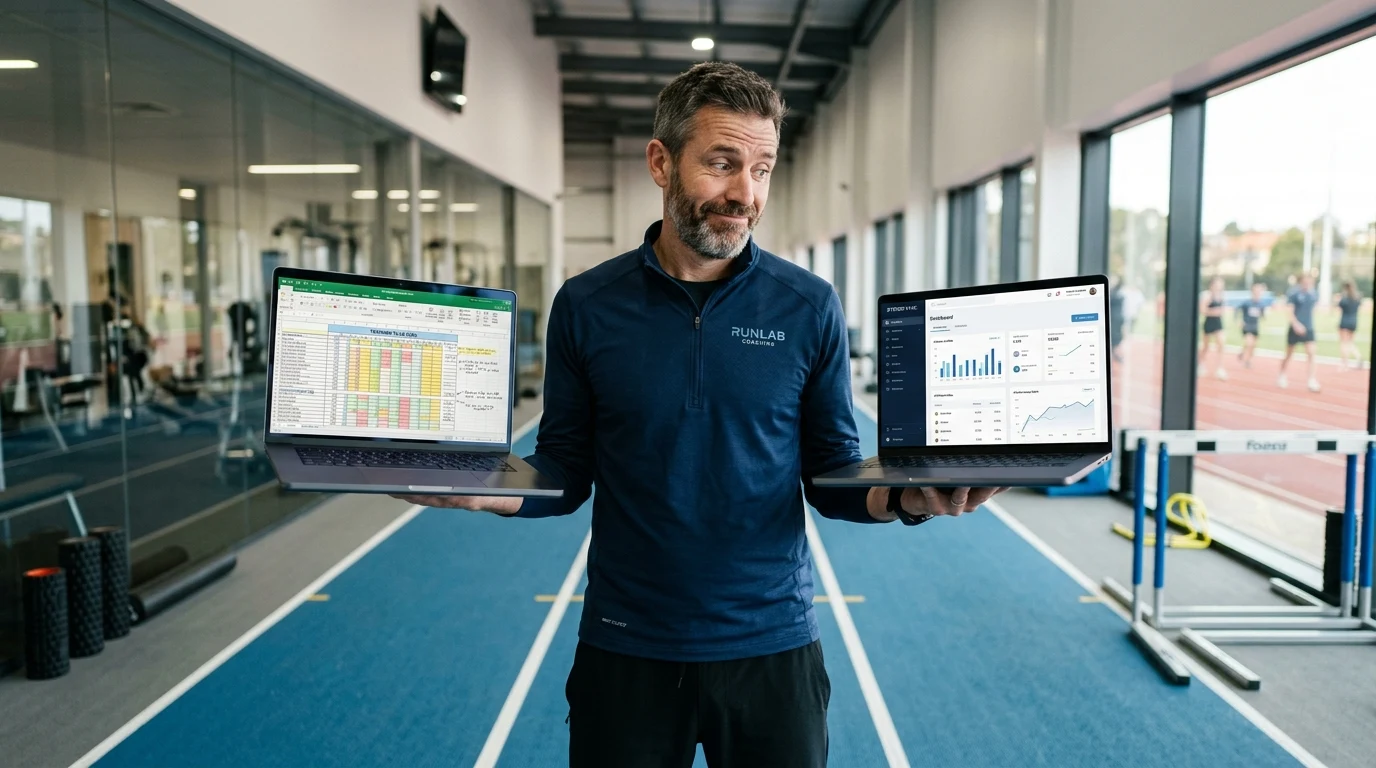
What Lies Behind the Fear of Switching
When we talk to coaches about switching software, there is a recurring pattern: the larger their roster—more athletes, more workout templates, more automations configured—the harder it is for them to imagine making the leap. It is not that they don’t trust the alternative. It is that they would have to set everything up all over again.
And they are right to be wary of that. Custom-configured training templates. Athletes registered one by one, along with their full history. Training groups organized by fitness level or season. In short: each coach’s proprietary methodology mapped into a platform. All of that is real work, measurable in billable hours, not just a vague feeling of “I don’t feel like it.” The more you have built, the more you have to lose if switching means starting from scratch.
If you are still in the early stages of building your system—few templates, few athletes, everything relatively easy to tweak—this matters just as much, though for a different reason: this is the moment when it is cheapest to decide what is worth standardizing and what isn’t, before that setup grows so large that changing it causes vertigo.
That is why the hurdle is almost never the quality of the new platform. It is picturing an entire weekend spent rebuilding what you already had.
Not Everything You’ve Built Weighs the Same
Here is the key to turning that fear from an overwhelming cloud into something manageable: not everything in your setup carries the same weight.
- There is raw data: activity history, training load, workout intervals.
- There is repeatable structure: workout block templates, activity types, season planning templates. You build this once and it serves every athlete—it does not multiply per runner.
- There is per-athlete structure: group memberships, personal assignments, custom configurations. This is what weighs the most, because it scales with every client.
When a coach considers migrating, the question that truly reduces anxiety is not “Is this new platform better?” It is: of everything I have built, how much is pure data, how much is one-time structure, and how much do I actually have to rebuild athlete by athlete? Almost always, that final category is far smaller than it seemed at first glance.
And if it isn’t—if doing this breakdown reveals so much custom work per athlete that rebuilding it feels paralyzing—then the migration might not be the real problem: it is a clear signal that it is time to consolidate and standardize your own coaching methodology. Personalization is something athletes value immensely, but it is also a coach’s greatest barrier when trying to scale without each new runner consuming more hours than the last.
I saw this exact same pattern in another chapter of my career. Before myalbatross, I founded and ran a tech consultancy working with hundreds of clients—from SMBs to publicly traded enterprises—helping them with ERP implementations and migrations (specifically SAP). And it was precisely during an ERP switch, or moving an ERP to the cloud, where this pattern surfaced most clearly: the more heavily a company had customized its system around “the way we’ve always done things,” the more painful the transition was—and nearly always, that excessive customization was the very bottleneck preventing them from growing faster. Switching tools, there as here, becomes a healthy catalyst to ask yourself the question we rarely pause to ask: how much of what I customize should actually be a repeatable standard?
How We Make the Transition Manageable
This is also our responsibility as a platform provider: having a great product isn’t enough, we must ensure the transition is painless. At myalbatross, we designed specific pillars to address exactly this:
- Recreating templates with Albi: You don’t have to manually recreate workout blocks and activity types from scratch: feed Albi screenshots of your existing setup in your previous platform, and AI helps recreate them. The most tedious part of “starting over” simply vanishes.
- Direct import of workouts and blocks: We import your planned activity and library templates directly into your account. (The athlete’s historical training data syncs automatically the moment they connect their GPS watch, without anyone having to import files by hand.)
- Personalized migration onboarding: We never leave you stranded: a dedicated specialist guides you through the transition so there are no surprises.
Switching platforms should never feel like a blind leap of faith or a risk of losing months of work. It feels intimidating because the perceived cost—rebuilding everything, plus the anxiety of disrupting athlete relationships—seems massive and indivisible. But that very fear often hides an uncomfortable truth: as long as you delay, you are denying your athletes a superior experience and service.
In practice, the migration is almost always simpler and more manageable than it looks from the outside—and if breaking it down reveals that it isn’t, the platform switch isn’t the problem: it is your opportunity to fix an operational bottleneck that was already costing you dearly before you even considered moving.
Want to see how it works with your own athletes?
Plan workouts with artificial intelligence, sync data from Garmin, Suunto, and Strava, monitor your athletes' injury risk, and receive alerts before problems appear.